By Our Correspondent
National News – Experts at the Africa Soft Power Summit 2026 have warned that Africa risks becoming a mere supplier of raw data in the global artificial intelligence economy if urgent action is not taken.
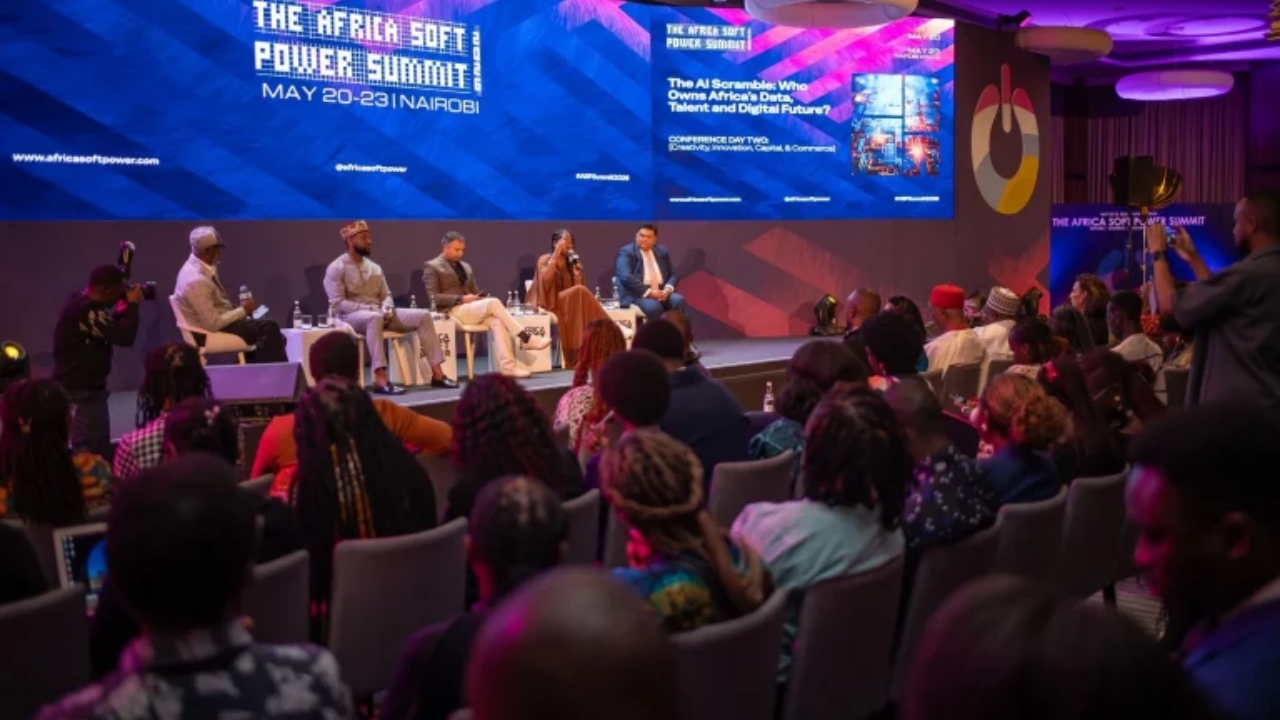
The warning came during a high-level panel titled “The AI Scramble: Who Owns Africa’s Data, Talent and Digital Future?”, held over the weekend, where stakeholders from Google, data infrastructure firms, finance, and AI startups discussed the continent’s digital future.
Speaking on the panel, Alex Okosi, Managing Director for Africa at Google, said the continent must avoid becoming only a consumer of imported AI tools.
He stressed that Africa must actively participate in building the underlying architecture of artificial intelligence, including models that understand African languages, dialects, and cultural contexts.
According to him, failure to do so would repeat past digital economy patterns where value creation and monetisation remain concentrated outside Africa despite local usage.
He also warned that power in the AI ecosystem consolidates quickly, meaning early participation is critical for long-term economic benefits across African markets.
Kate Kallot of Amini and Snehar Shah of iXAfrica Data Centres emphasized that Africa risks repeating an extractive model where data is collected but value is generated elsewhere.
They identified three critical pillars for competitiveness: data governance systems, compute infrastructure, and skilled talent development.
Shah noted that Africa still holds a small share of global digital infrastructure despite its population size, but growth opportunities exist in renewable energy, submarine cables, and data centre expansion.
Both experts argued that building local capacity is essential to ensure Africa benefits economically from its own data resources and AI-driven innovation.
Birju Sanghrajka of Standard Chartered Bank Kenya noted financing Africa’s AI sector will depend on business models, predictable revenue streams and stronger risk assessment frameworks.
He explained while infrastructure assets like data centres are familiar to banks, AI products still lack consistent demand signals and monetisation clarity.
He added that institutional investors require structured frameworks before scaling funding.
The summit concluded that Africa’s future growth depends on converting talent, creativity and data into sustainable economic value.