
By Our Correspondent
National News – The Artemis II mission has successfully left Earth’s orbit, with NASA’s Orion spacecraft firing its main engine for a precise push toward the Moon.
The five-minute, 55-second translunar injection (TLI) burn went flawlessly, propelling the astronauts on a path that will take them around the far side of the Moon and back.
Canadian astronaut Jeremy Hansen, the first non-American to travel this far, said the crew was “feeling pretty good” and inspired by humanity’s collective achievements.
The Orion spacecraft is set to carry the crew farther from Earth than any humans have traveled before—more than 4,700 miles beyond the Moon.
This could surpass the record set by Apollo 13 in 1970, depending on trajectory timing.
During the mission, Orion’s engines, navigation, and life-support systems have undergone extensive checks to ensure safety.
NASA emphasizes that the spacecraft can still return to Earth in the first 36 hours after TLI if an emergency arises.
Orion’s service module executed a long, steady engine push, increasing speed by thousands of kilometers per hour, setting the stage for a historic lunar flyby.
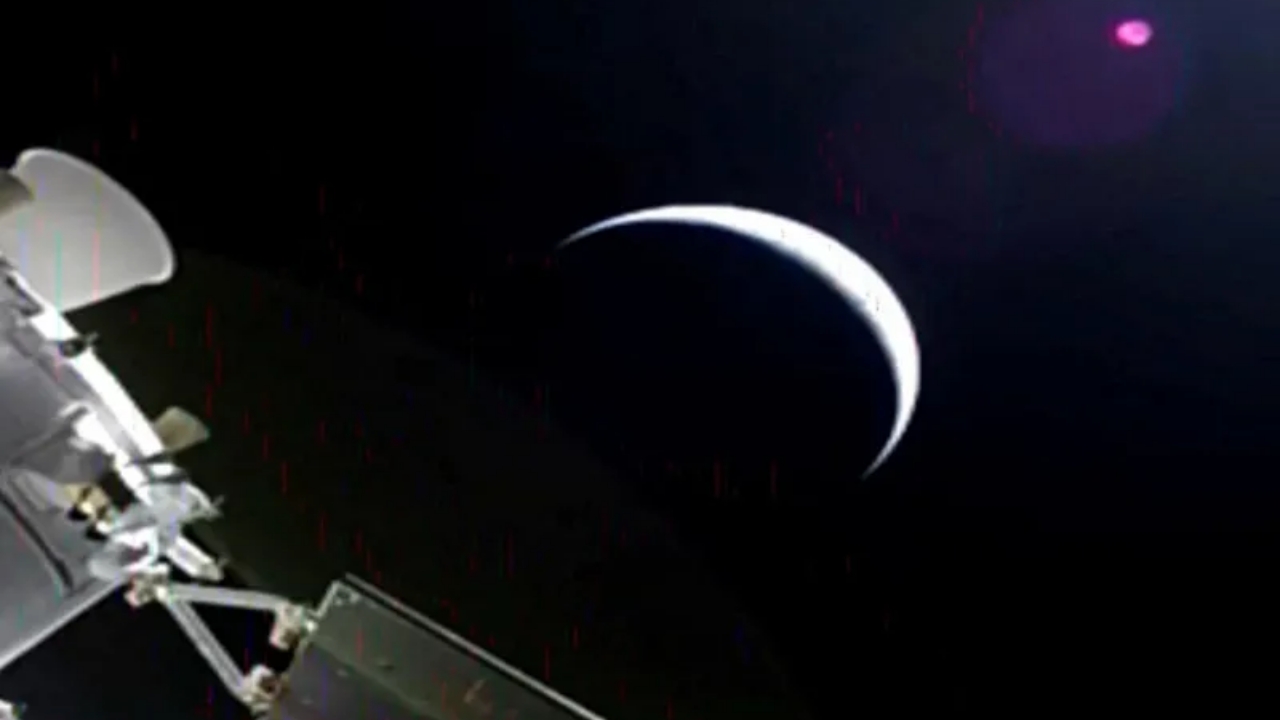
As the spacecraft ventures deeper into space, astronauts will witness stunning views: Earth shrinking to a small blue marble and the Moon expanding into a cratered landscape.
On approximately the sixth day, they will experience a total solar eclipse from space, with the Moon blocking the Sun and revealing its shimmering corona while Earth hangs in view.
NASA has run hundreds of thousands of simulations to guarantee crew safety, ensuring Orion can perform necessary course corrections.
This mission marks the first human travel outside Earth’s orbit since 1972 and represents a critical step toward returning humans to the lunar surface.
Artemis II demonstrates technological excellence and international collaboration in human spaceflight, inspiring new ambitions for future Moon missions and even Mars exploration.