
By Bini Francis
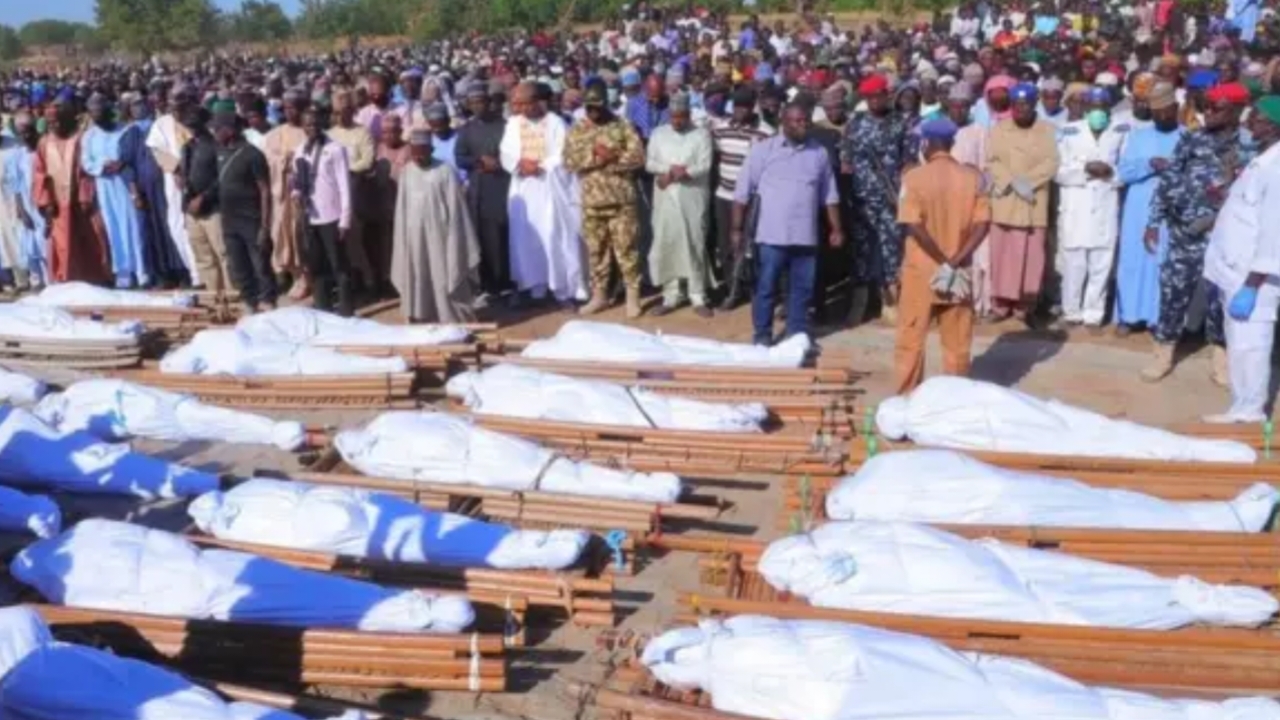
Farmers across several parts of northern Nigeria have increasingly found themselves trapped in a disturbing reality where they must pay huge sums of money to armed bandits before they are allowed to harvest crops from their own farmlands.
In many rural communities, the practice has become so widespread that it now operates like an unofficial tax imposed by criminal gangs who control surrounding forests and villages.
In several farming settlements, villagers say bandits demand millions of naira as “harvest levies” before farmers can enter their fields during harvest season.
Those who refuse or fail to pay are often threatened with violence, kidnapping or destruction of their farms.
For many farmers, the choice is painfully simple—pay the bandits or risk losing everything.
Community leaders say the system has gradually turned agriculture into a dangerous gamble. Some farmers reportedly sell livestock, borrow money or pool resources with neighbors just to meet the demands imposed by the armed groups.
The situation has created a parallel authority in certain rural areas where criminals determine who can farm, when they can harvest and how much they must pay.
Observers say if the government truly cared about the plight of rural communities, decisive action would have been taken long ago to dismantle these criminal networks.
Instead, critics argue that the practice has persisted for years with little visible intervention strong enough to end it.
Security experts warn that the long-term consequences of this situation extend beyond the immediate suffering of farmers.
Nigeria’s food supply depends heavily on small-scale farmers working in rural communities.
When these farmers are forced to abandon their land or pay huge sums to criminals, agricultural production inevitably declines.
This has serious implications for food prices, food security and the overall stability of the country’s economy.
Yet for many affected communities, the problem has received far less attention than it deserves.
While rural farmers struggle to survive under the shadow of armed gangs, critics say the government often appears more responsive when dealing with citizens who criticize authority.
Several outspoken Nigerians have faced arrest, intimidation or prolonged detention after speaking against government policies.
One prominent example is activist and former presidential candidate Omoyele Sowore, who was arrested after calling for nationwide protests against the government.
Human rights advocates also point to repeated confrontations between security agencies and activist lawyer Deji Adeyanju over demonstrations and political criticism.
To many observers, such swift actions highlight what they see as a troubling imbalance in the priorities of the state.
Critics argue that the speed with which dissent is addressed contrasts sharply with the slow response to armed groups terrorizing rural communities.
This frustration is further fueled by the experiences of motorists traveling across the country’s highways.
Many road users frequently complain about security checkpoints where some personnel allegedly demand money from drivers before allowing them to pass.
Drivers recount situations where vehicles are stopped repeatedly and small payments are collected along the road.
For ordinary Nigerians, the sight of armed officers collecting money on highways while terrorists and bandits continue to operate in rural areas creates deep resentment.
Analysts caution that not every security officer engages in such conduct, but they acknowledge that corruption at checkpoints has remained a persistent public complaint.
At the same time, violent attacks by insurgent groups continue to devastate communities in northeastern Nigeria.
The latest disturbing example comes from a viral video reportedly released by the extremist group Boko Haram.
The footage shows hundreds of villagers abducted during a raid in Borno State.
Reports indicate that the victims were taken from Ngoshe community in Gwoza Local Government Area after insurgents stormed the village.
The attackers reportedly moved through the settlement, burning homes and rounding up residents before forcing them into captivity.
In the viral footage circulating online, dozens of frightened villagers can be seen gathered together under the watch of armed fighters.
The images have once again reminded Nigerians that the insurgency remains a serious threat despite years of military operations.
The security crisis has also been complicated by the activities of militant factions such as Islamic State West Africa Province, which operates across remote areas of the region.
Communities living near forests and border regions often remain vulnerable to sudden attacks.
For families whose loved ones appear in the viral video, the images represent far more than a disturbing headline.
They are a painful reminder of the dangers faced by ordinary Nigerians living far from the protection of major cities.
The administration of President Bola Ahmed Tinubu has repeatedly pledged to strengthen security and defeat terrorism across the country.
Yet critics insist that meaningful change must go beyond promises.
For farmers forced to pay bandits, travelers confronted with corrupt checkpoints and villagers abducted by insurgents, the expectation is simple.
They want a government that responds to their suffering with urgency and decisive action.
Until such action becomes visible, many Nigerians fear that the cycle of insecurity, fear and frustration will continue to define life in some of the country’s most vulnerable communities.